
Journal to a Happier Relationship and More Joyful Life
Journaling is not a grownup version of a kid’s diary. A journal is a place to write failures, fears and concerns that might interfere with the adult creating the joy they want in life.
Write it down and let it go. Use colors, treasure maps, mind dumps and NLP methods, whatever suits you to let go of the things in your way and focus on the life goals ahead of you.
This site contains product affiliate links. We may receive a commission if you make a purchase after clicking on one of these links.
It’s really a great thing!
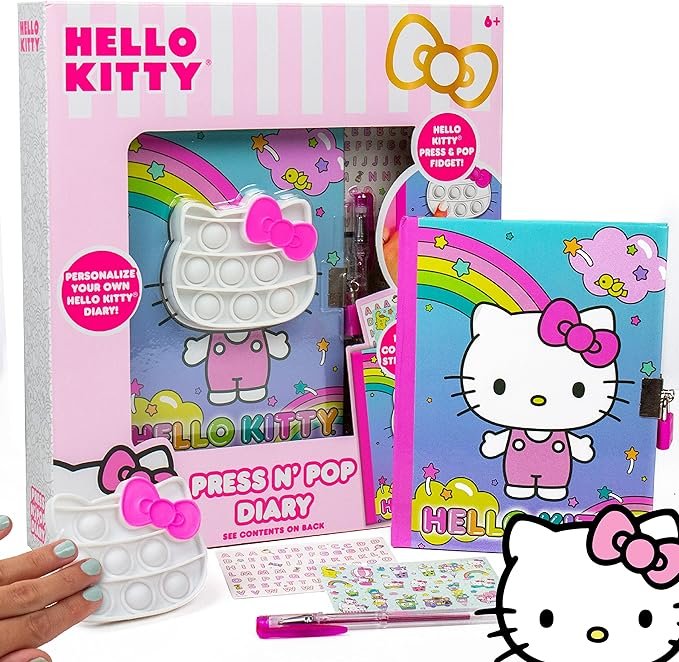
When I think of journaling, I used to think of diaries with tiny keys and Hello Kitty appliques. I admit I was not a fan. And notice I said “used to” because I have a discovered a new-found respect for journaling as a beneficial and tangible way to get “stuff” out of your head and make room for new creativity and positive thoughts.

Hello Kitty diary by Amazon
Neuro Linguistic Programming
Journaling is a credible method to clear and organize your thoughts by venturing into Neuro Linguistic Programming (NLP). NLP deals with the relationship between language and the function of the brain. And while I only have a meager amateur understanding of NLP, it seems to me that journaling is an excellent way to incorporate all of the NLP modes humans use to process life experiences. I do use NLP methods I learned years ago to improve the communication and the sense of connection between my husband and me. I have been very pleased with the positive results I have seen in our relationship so why not journaling?
People process their life events through the NLP modes of visual (seeing), auditory (hearing), and kinesthetic (physical) methods in some order of prominence. Everyone has primary and secondary means but there are advantages to disrupting that order “mixing things up to see events in a new way” kind of thing.
Journaling can get failures, setbacks, negative thoughts out of your head to stop them swirling around in your brain and spinning out of control. [Or does that only happen in MY head?]
Brain Dump
Brain Dump (or sometimes Mind Dump) is an exercise to write down as many random, negative thoughts as you may currently have. The reason for the brain dump is to help you release the non-productive messages you are sending to yourself in order to give them less power while freeing up space in your mind for positive thoughts and more creativity.
Both methods require some practice and, like a diet or daily walks, they take a commitment in order for the new habit to take hold. But either or both can be very effective to release the negatives and create the positive. There are basically two responses to a setback - the depressed Eeyore response “I’m no good, I can’t do anything” or the brush yourself off response “Wow that clearly didn’t work! Guess it’s on to Plan B.” And while it’s important to learn from a setback, dwelling on the failure is never helpful. The Mind Dump is a great method to move on.
Journaling in Action
There are an infinite number of methods for journaling so I’ll just cover a few basics.

My new journal
In my new journal, seen above, I take some pages for brain dumping. Phrases, words, experiences - anything negative - I just let it all out! No justifications, no reframing, no silver linings, just dump.
On other pages, I sometimes process through an experience:
What happened?
How I felt?
What could have been done differently?
What will I change the next time I may encounter something similar?
That method is helpful for me because I hate getting burned twice so understanding the lesson learned is comforting for me.
Cautionary Tales
Since no one ever sees this journal, it is even more important to be very honest in your writings. Don’t document who you can blame for the experience. Own your piece. What did you do that contributed to the problem. That’s where the learning is. If you find someone to blame, it’s hard to do it different the next time. Now, others in the experience do have a part to play and may have made mistakes but that’s for their journal and their lessons to learn.
Negative to Positive
With a little patience, you can get to a place where your journal will become your repository of flubs and failures. The place where you can write it or draw it or collage it and then let it go.
For me it also is a place where I document my future, my vision, my goals. And although I am not much into collage, photographs and colored markers, I have even treasure mapped (a more tactile way to encourage the NLP pathways.
Short-term and long-term goals are listed and broken down into priority and then manageable steps. These steps can then become part of my daily tasks. I can journal about the result after the fact and learn from the successes and failures. The treasure map of making photographic collages of your goals is especially helpful for visual and kinesthetic people.
Whatever method you choose - treasure map, simple lists, or journal entries - let your thoughts flow. Use colors if your prefer, draw sketches if it suits you. You may find that it will begin to relieve some of your stress and will help focus you on your goals. And it’s fun!
Last Minute Thoughts
Use a journal without judgement. It’s a tool for letting go, learning and refocusing. Gathering evidence to prove you’re no good will not accomplish anything. Letting go, learning from mistakes and setting new goals is what it’s all about.
[Special note: I want to just mention that folks who have experienced a deep trauma may require supportive assistance like coaches or counselors trained to be of help in these areas. Healing is the priority and please get in touch if we can be of service to you.]
Coaching
If you’d like some coaching to help you in your journey, please let us know. We’d be honored to walk along with you.
Neuro Linguistic Programming
Interested in further reading on NLP?

Good Reading!
Here’s a good start.

What’s Love got to do with It? Everything!
As important as all of the 10 keys are, LOVE may top the list. It can propel you through the bad times, distant episodes and disagreements. Love can motivate you to endure the darkest nights so you can reach the light of healing.
Tina Turner asked the question in her 1984 song - “What’s LOVE got to do with it?” My answer would be just about everything. I am going to write about LOVE - one of the 10 keys for a strong, loving relationship. Why the concept is right there in the title “strong, loving relationship”.
LOVE is an emotion we all know either by our experiencing it or our desire of wanting it in our life. Defining it is something I will leave for scholars. Suffice it to say, LOVE is a bit of magic in our life and something we are all willing to go ‘head over heels’ for if we get the chance.
I am focusing on the romantic love relationship that 2 people create and share - sometimes for a lifetime if they are lucky.
Love is the top of the 10 keys
As important as all the 10 keys are, LOVE may top the list. There are arranged relationships/marriages that may or may not involve LOVE and many of those are happy pairs and successful for decades. But in arranged marriages, some of the other keys may be enhanced, I believe, so that the focus is on the partnership and the importance of mutual respect in order for the team to be successful. Most western relationships rely on emotional attraction.

Pixabay Image by MabelAmber
In a romantic relationship, LOVE is the element that can propel you through the bad times, distant periods and disagreements - large and small. It can make it worth the struggle to keep the relationship intact when pride or revenge or giving up may make a split the easier choice to make. LOVE can carry you through the darkest night into the light of healing.
Falling In and Out of Love
If you can ‘fall’ in LOVE, can you fall out of LOVE? I suppose so but I bet there’s more behind it. I doubt you wake up one morning and suddenly say “Hey, I don’t love you anymore.” There have been times when I didn’t like my husband, Skip, very much. But even during those times of emotional distance, I realized that I had issues surfacing that may have had little to do with Skip. “It’s not you, it’s me!” kind of thing that I was simply taking out on Skip.
Or, there might have been issues Skip was experiencing/avoiding “When you do _____, I feel _____” that I was either too afraid or too angry to deal with directly so I let it fester until the situation was out of control.
In those circumstances - talking is the obvious remedy. Just a simple non-accusatory discussion “Hey Skip, I need to talk to you, is now a good time? The other day you did ______ and I felt _____. And I realized I’ve been getting even with you since then. I'm not going to do that because it isn’t fair to you. Would you be willing to ___________? Great that would help a lot. Hey, you wanna go out for dinner?” Yes I realize that may sound like a fantasy depending upon where your relationship is right now but, trust me, you can honestly get there.
Something Became More Important
Often talking is all that is needed to solve many of the problems of a romantic relationship. We find it best to talk during a neutral instead of a heated argument. [Watch for our post about conflict resolution, if you’d like to learn some new skills.] Remember that LOVE is most important and that conflicts are usually the result that something became more important (SBMI) than LOVE. That something could be many things - ego, revenge, need to defeat the other, forcing a confession, desire to intimidate, etc.
[SBMI is actually one of the best kept secrets of life. Read that blog here.]
Certainly, the state of the relationship itself can change. One or more of the other 10 keys can be broken or there is abuse in the relationship. The partnership has a boundary of its own. If the break is serious and especially if safety is a concern, your decisions have to be for the immediate safety of both partners. Get safe, get some space, find someone to talk to. While the relationship may survive, it may take some help to figure that out.
Keep Closeness as your Goal
I encourage you to get to basics. Listen to your heart not your ego. Keep closeness as your goal. You’re not there to teach the other a lesson or to “win” the argument. Remember you can only monitor yourself not your partner. Likewise, you only have control over your own behaviors, reactions and decisions. You cannot not control your partners feelings and reactions. With practice, you’ll begin to notice when SBMI comes into play. And while you may need a few new skills to smooth out the peaks and potholes of a relationship, John Lennon may have said it best, “LOVE is all you need.”
Want some help learning those new skills to increase closeness? Need a mediator to get you through a rough patch? It’s what we do! Go over to the appointments page to get started. We’d be honored to talk you through the process.
OK, everybody sing…”All you need is love…”
Have a good one y’all.

Effective, Compassionate Coaching Online? You bet!
Online coaching offers us the opportunity to work with clients coast to coast from the comfort of their favorite chair.
You may have decided you’re sick and tired of being sick and tired. Maybe you and your partner have noticed the spark has dimmed and needs to be fanned a little. Maybe a fog has settled in and you just can’t see your vision any longer. A life coach can help individuals and couples get back on track, re-light the spark and lift the fog. But how do you fit the appointment into your already overwhelming weekly schedule?
Our online world provides many opportunities to perform many daily tasks online that we all assumed required face to face visits. My primary doctor even offers online visits these days. It makes sense. Not feeling well, bad weather, finding a babysitter, fighting traffic, arranging time off work, etc. Sometimes going out is a big deal and is face to face really essential?
The online world has been critical for Swies Life Coach for years now. With clients from all over the country, Zoom appointments have made it possible for us to see all these people and be of service to them with less interruption of their daily routine. Whether they are at work or home, instead of jumping in their car and fighting traffic, our clients simply jump online from their favorite chair.

Unsplash photo by Devin Pickell
Sometimes couples prefer separate locations so they feel more freedom to discuss their concerns and often couples will share a screen or sit next to each other on individual laptops - whatever suits them best. It’s all available online.
Online appointments often fit more easily into work schedules as well. We have several clients who spend a lunch break having an appointment with us or before or after work - again saving the stress of travel and parking.
At Swies Life Coach, we have online seminars (see Events for 2024 dates and topics). We are also planning in-person weekend and one-day workshops and are considering a destination weekend later in 2024. How does Taos sound?!
OK, so assuming I have made a valid argument for online coaching. It saves time and stress and opens opportunities for a counselor from anywhere in the country.
But what about the most important part of the relationship between client and coach - the connection. The key ingredient in a coach-client relationship is rapport. Rapport means the client is comfortable sharing heartfelt concerns with the coach and feels connected to the coach because of their counseling style and basic philosophy. If there is no rapport, there cannot be complete trust and the process is likely to be unsuccessful.
Does your coach ask about your counseling goals? Ask why you decided to come to see a coach? Are they interested in you as a person?
Your choice of a coach is yours and yours alone. I encourage you to consider your options based on your initial conversation and your rapport with the coach over geographic location. Suburban and rural clients can have the same variety of coach choices that are available in large cities simply by going online. Let us know if we can be of help. You can call us about scheduling a FREE 30 minute Discovery Appointment.
I wish you the very best on your journey to create more joy in life. Envision your life then create it.

Wanna know what keeps them stuck?
“Wanna know what keeps them stuck” is a simple phrase with a powerful message. We all create beliefs and expectations for ourselves that are a response to things that happen in our life. We make decisions about who we are and our place in the world as a result. Sometimes those beliefs can be self-limiting and keep us from enjoying the closeness and joy we want in life.
(or how we avoid acknowledging we are the masters of our own experience.)
The Personal Growth Movement (PGM), which included experiences such as EST, UYO, Lifespring and Fire Walks, was born out of the counter-culture of the 1960s and 1970s. Concepts of personal responsibility, life mastery and creating more joy in life were foundational to the movement.
Skip and I were children of those times and by the early 80s, we were certified instructors of personal growth weekends. Over the next 40+ year, we have taught thousands of people in weekend seminars and coached hundreds as individuals and couples across the country.

Unsplash photo by Wes Lewis
So what about the phrase “Want to know what keeps them stuck?” This simple phrase has been an integral part of most of the weekends we have taught and is just as important in our coaching sessions. The work “stuck” implies being mired in a moment of time or unable to move forward. And that is exactly the emotional description of what happens to a person who is unable to move past negative events in their lives. Trauma, confusing or negative experiences, even incorrectly assessed memories can put a person into a psychic loop that prevents them from moving forward with new relationships and events. It’s sorta like coming home from a bad vacation and continuing to drag your suitcases around behind you forever. When we are stuck with all that baggage, there is little hope to can define new experiences in their own context and make appropriate decisions for the current situation.
From a free-verse poem by Bill Riedler and Kath Kvols, the “keeps them stuck” phrase describes that point in anyone’s life when they become unable to move forward from a perceived role or unhappy life, stuck in protecting oneself from perceived pain or humiliation or, for many, simply stuck in the past.
“When we are stuck with all that baggage, there is little hope to can define new experiences in their own context and make appropriate decisions for the current situation.”
It means that when some of us are faced with a new experience or decision that we perceive as similar to a painful, sad or humiliating memory from our childhood or early adulthood, we get “stuck” in that memory and mistakenly think the same outcome is inevitable. What we decided back then about ourself and our place in the world must also apply to this current situation - whether it’s appropriate or not. That’s the psychic loop. Being stuck can prevent you from analyzing the current situation to decide the best course of action and instead subconsciously we say “Oh I know this one! This is just like when I was 5.”
For example, what if as a child, a child’s pet died or ran away. It would be reasonable to think that the child may have decided not to love anything so much because it might go away.
Now fast forward to adulthood and this belief that loved ones will go away may cause the adult to leave relationships before a deep commitment is made or may even avoid relationships altogether. This, of course, is a very simplistic description of the very involved state of human emotion but we all experience this concept as we grow up.
Often people do what they know even if it is not in their long-term best interest. For adults, it can be difficult to break out of this cycle or even realize they carry beliefs that are detrimental to their own happiness. They’re STUCK.
Some of our clients experiencing these self-limiting beliefs and we assist them in becoming aware so they can change the expectation, if they choose, that negatively impacts their happiness. It’s not about getting rid of these beliefs, it’s about being in charge, being aware and being in the moment when deciding how to react.
Beliefs have a very important role in our lives. They can protect us from harm. They must be managed though and not in charge. You can’t manage your beliefs and expectations if you don’t realize you have them.
I often tell our weekend seminar participants that this experience is like cleaning out your closet. “We’ll take everything out of the closet, decide what you don’t like anymore, figure out which things don’t fit any longer then you can keep whatever you want and add some new stuff if you want and there you go - beliefs and expectations that fit you as you are now in THIS moment.

Image by Priscila Du Preez (Unsplash)
Even with a new awareness of your beliefs, there is a process of unlearning and retraining your brain to analyze each new experience and not jump back into old habits. It takes practice and self-acceptance.
Here’s a personal example: I have lovingly been described as a very resistant, stubborn person (me?). It comes from a childhood with a very controlling mother. I grew up learning to resist every decision she made for my “own good”. Once I became aware that this was a filter for many of my life experiences, I slowly learned to be more aware of whether I was making decisions in my own best interest or merely against her. Although I aim at the former it doesn’t mean I don’t end up with the latter. Skip just gives me that “you’re resisting” look and a pause and smile while I make sure it’s the right decision at the right moment for me and no one else.
“What decisions, beliefs and expectations are any of us carrying from our early years that are negative, erroneous, or non-productive and getting in our way now?”
A client of ours years ago, explained her childhood. Elizabeth had grown up experiencing horrible physical abuse. It was a miracle she survived at all. Parents were alcoholics and Elizabeth often had to “parent” the drunk parents, clean house and feed her younger brothers while trying not to set off the violent moods of her parents in order to protect her siblings from the abuse.
She learned early to be constantly on edge and anticipating the worst that could be around every corner. She carried that forward into her adult life until she told us about it during a session and realized the beliefs she had developed and the expectation she carried about even the simplest things in her life. “If I don’t have a crisis to deal with constantly, I don’t know how to live my life!”
With some help, she learned how to stay in the moment when dealing with day to day activities. Instead of anticipating everything as a crisis, she slowly began to focus on all the normal and the positive going on in her life and how to handle the negative crisis from a slightly detached point of view if and when the crisis occurs. What a shift! She actually enjoys getting out of bed most days.
Being stuck is simply a state of mind. We can change it whenever we want. Sometimes it just takes a coach with a loving, patient smile that tells you that you’re being resistant or sad or guilty or whatever and says, ”Would you like to let go of that?” Can anything be more freeing?
Ready to let go of your self-limiting beliefs? Book your appointment TODAY! Check out more of our posts here